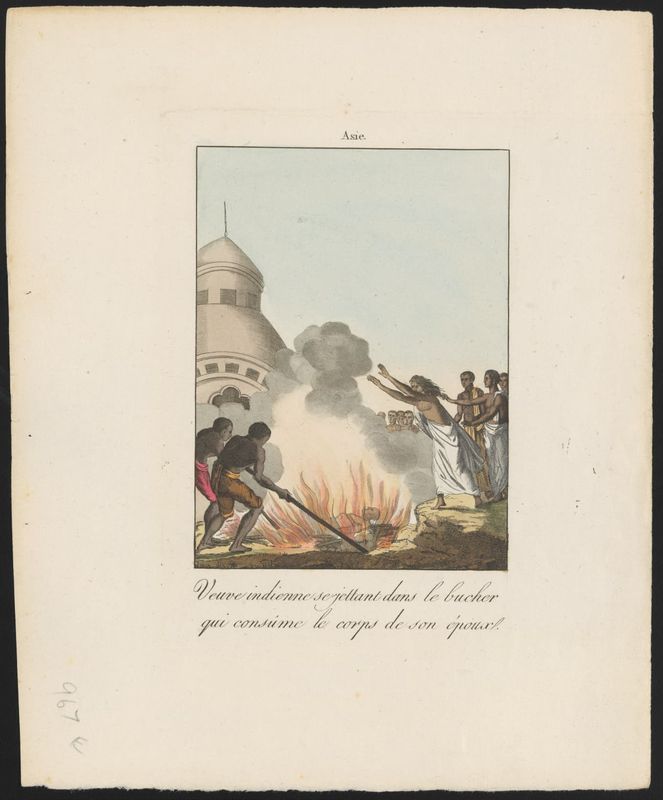
Example: Burial Customs and Colonial Fascination
Stories of death and burial customs among Mughal and Hindostan peoples have long fascinated colonial observers. This interest often stemmed from a mix of curiosity, exoticism, and a desire to document practices perceived as "other." Such accounts were frequently filtered through colonial perspectives, which could lead to misunderstandings or misrepresentations of local beliefs and rituals surrounding death.
In many cases, these narratives were used to justify colonial rule by portraying indigenous practices as primitive or in need of reform. The fascination with burial customs also intersected with broader themes of power, control, and the imposition of European norms on colonized societies.
In particular, the custom of a woman self-immolating on her husband's funeral pyre, known as sati, was sensationalized in colonial literature. While sati was practiced in certain regions and periods, its portrayal often lacked nuance and failed to consider the complex social, religious, and economic factors that influenced such practices.
[essay continues...]